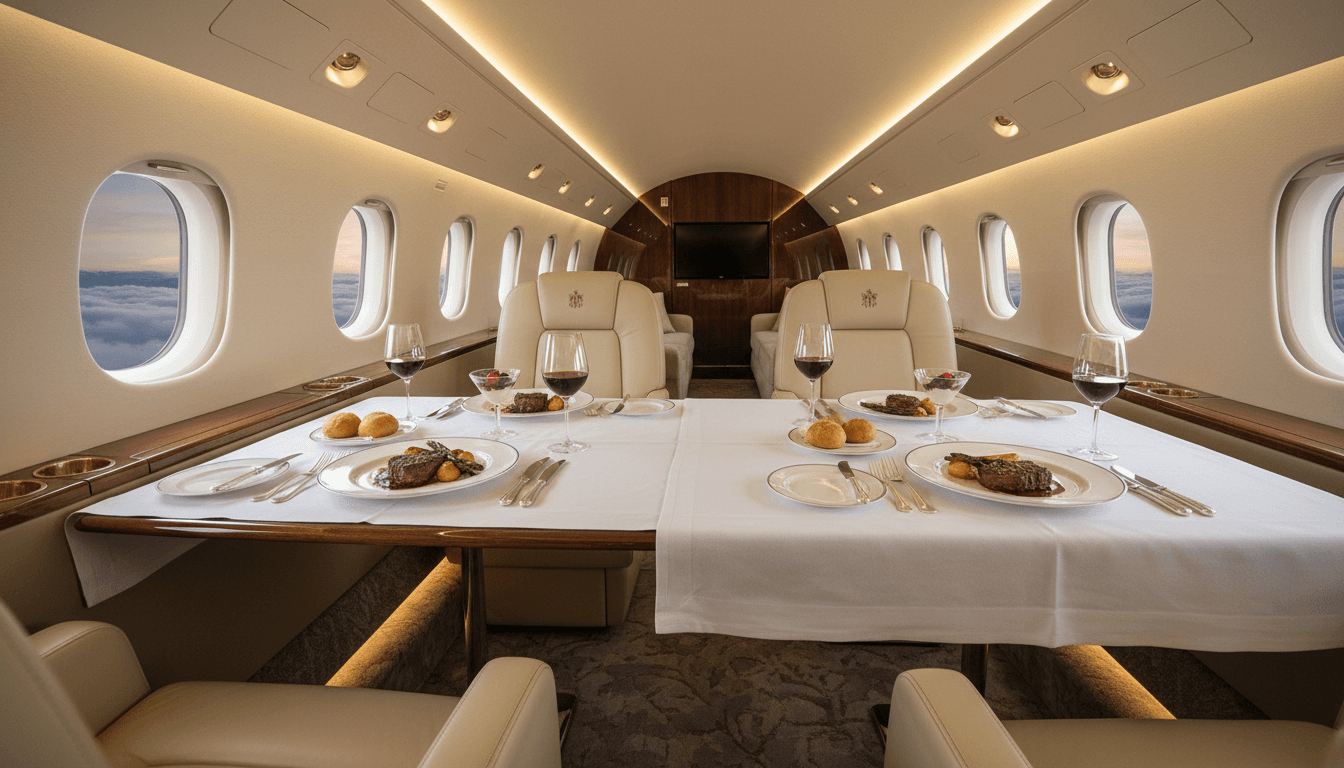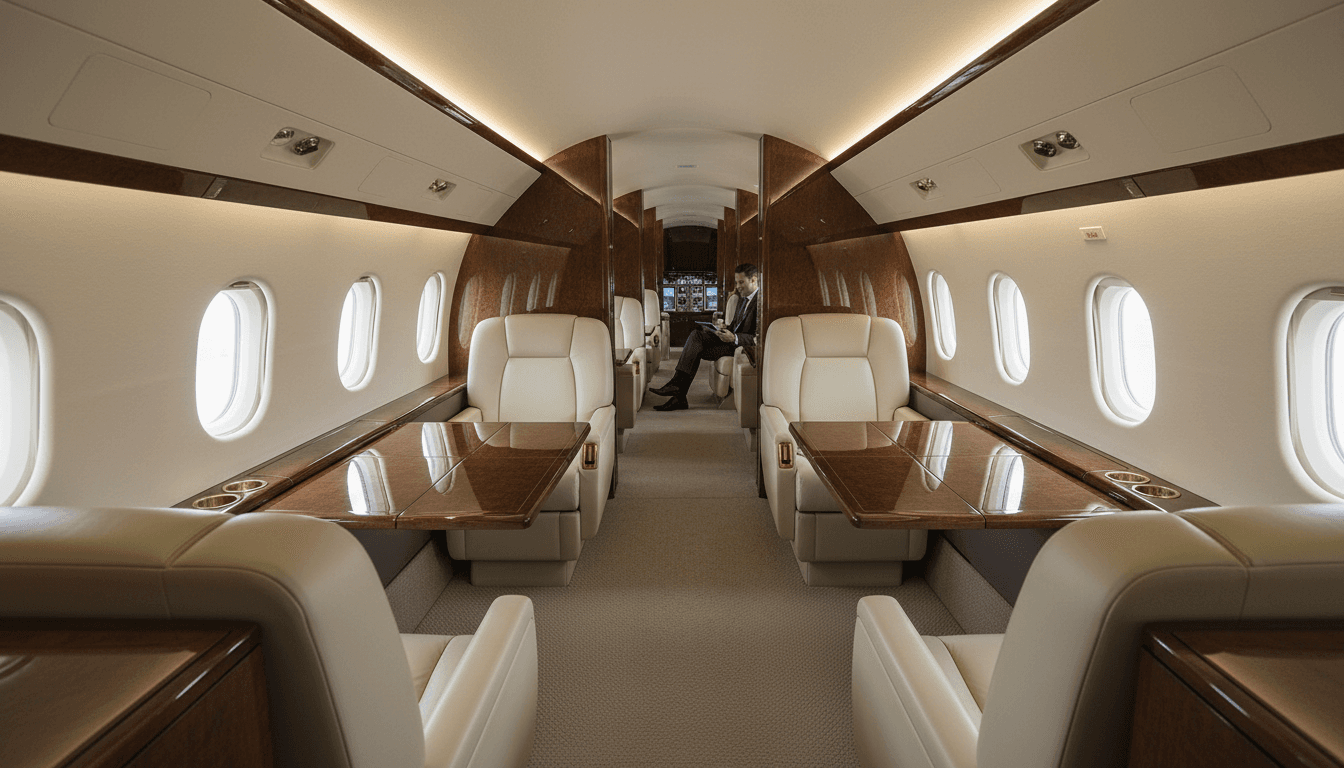
Private jet charter for business is worth the investment for small companies that prioritize extreme time efficiency and direct access to remote locations not served by commercial airlines. While the upfront costs are higher than traditional travel, the significant gains in executive productivity and scheduling flexibility often justify the expense for time sensitive operations.
For the modern small business leader, the traditional commercial hub and spoke model is no longer a mere inconvenience; it is a drain on your most finite resource. When you factor in the hours wasted at security, the risk of late connections, and the impossibility of conducting secure strategy sessions in a public cabin, the perceived savings of a first class ticket quickly vanish. In 2025, maintaining an edge requires an operational agility that scheduled airlines cannot provide. This guide examines the practical realities of private jet charter for the growing firm. We will analyze specific cost structures, quantify the return on investment for recovered hours, and explore how access to regional airstrips opens new markets. Finally, we provide a practical checklist to help your CFO decide if private aviation is a functional tool for your next quarter.
The Shifting Landscape of Corporate Travel in 2025
The landscape of European corporate travel has reached a tipping point in 2025. For small business owners and executive assistants, the reliability of major commercial hubs has diminished, replaced by frequent disruptions and a significant reduction in regional connectivity across the UK and the Continent. This environment has transformed private jet charter for business from a perceived luxury into a pragmatic logistical necessity. When a scheduled flight cancellation results in a missed contract or a full day of lost productivity for a senior leadership team, the financial impact far exceeds the price of a commercial ticket.
While the initial invoice for a private flight is higher than a business class seat, a comprehensive audit must account for the total cost of travel. This includes lost billable hours, the expense of overnight stays necessitated by rigid commercial schedules, and the physical toll of navigating congested terminals. At E.L.F., we function as an independent resource to help you simplify charter decisions by analyzing these variables objectively. Understanding why private aviation is essential in the current market requires moving beyond the sticker price and viewing the aircraft as a time recovery tool. We provide the clarity needed to determine if chartering is the right investment for your firm's specific mission requirements.
Breaking Down the Costs: What Does It Actually Cost to Charter for Business?
Quantifying the investment in private aviation requires moving beyond generalized estimates toward current 2025 market realities. In the UK and Europe, hourly charter rates typically fluctuate between €2,500 and €10,000. These figures are influenced by aircraft age, positioning requirements, and current fuel surcharges. To simplify charter decisions, it is helpful to categorize these costs by aircraft type and mission profile.
For regional business trips, such as London to Frankfurt or Manchester to Paris, a light jet—ideal for teams of three to five—typically ranges from £6,000 to £10,000 for a round trip. When the mission involves a larger leadership team or requires a cabin with standing headroom, midsize jets often exceed £20,000 for similar regional routes.
Aircraft Category | Average Hourly Rate | Regional Trip Est. (UK/EU) | Passenger Capacity |
|---|---|---|---|
Turboprop | €2,000 - €3,500 | £4,500 - £7,500 | 4-8 |
Light Jet | €2,500 - €5,000 | £6,000 - £10,000 | 4-7 |
Midsize Jet | €5,000 - €9,000 | £18,000 - £25,000 | 7-9 |
Heavy Jet | €10,000+ | £35,000+ | 10-16 |
The financial profile of a charter changes significantly based on passenger count. While a solo founder will find the cost substantially higher than a commercial business class seat, the calculation shifts for a team of four to six. When you aggregate the cost of several last-minute business class fares, plus the associated ground transport and overnight accommodation required by rigid commercial schedules, the "per head" cost of a light jet becomes highly competitive.
In many cases, the total invoice for a private jet charter for business is lower than the combined cost of commercial travel when accounting for the full team's transit. Furthermore, savvy operations directors can further reduce these figures by monitoring empty leg flights, which offer high-tier travel at a fraction of the standard charter rate. This data-driven approach allows for an objective assessment of the travel budget against the firm's strategic goals.
The ROI of Time: Beyond the Ticket Price

The true value of a private jet charter for business is measured not by the price of the ticket, but by the recovery of the most finite resource: leadership time. For an operations director or executive assistant, the door to door calculation is the only metric that matters. Commercial travel often subjects executives to what we call the Heathrow hurdle or the Gatwick grind, where hours are lost to security queues, terminal transfers, and check-in requirements that demand arrival three hours before departure.
In contrast, utilizing smaller Fixed Base Operators (FBOs) such as Farnborough, Biggin Hill, or Shoreham changes the logistics entirely. These dedicated facilities allow passengers to arrive just 15 minutes before takeoff. There are no mile long treks through duty free or congested boarding gates. Instead, the vehicle pulls up almost to the aircraft steps, and the transition from car to cabin is near instantaneous.
Travel Phase | Commercial (LHR/LGW) | Private (FBO) | Time Saved |
|---|---|---|---|
Pre-flight Arrival | 180 Minutes | 15 Minutes | 165 Minutes |
Security & Boarding | 45 Minutes | 5 Minutes | 40 Minutes |
Deplaning & Exit | 45 Minutes | 5 Minutes | 40 Minutes |
Total Savings per Leg | 270 Minutes | 25 Minutes | 4+ Hours |
This efficiency extends to the air. Commercial routes frequently force layovers at major hubs when traveling to secondary business centers. A flight to Lyon or Stuttgart from a regional UK airport might require a change in Paris or Frankfurt, turning a short hop into a five hour ordeal. A private charter flies direct to the closest airstrip, often landing minutes away from the final meeting location. To simplify charter decisions, EAs must account for these eight to ten hours of reclaimed productivity per round trip, which is often why private aviation is essential for maintaining a competitive edge in 2025.
In-Flight Productivity: Turning a Cabin into a Boardroom
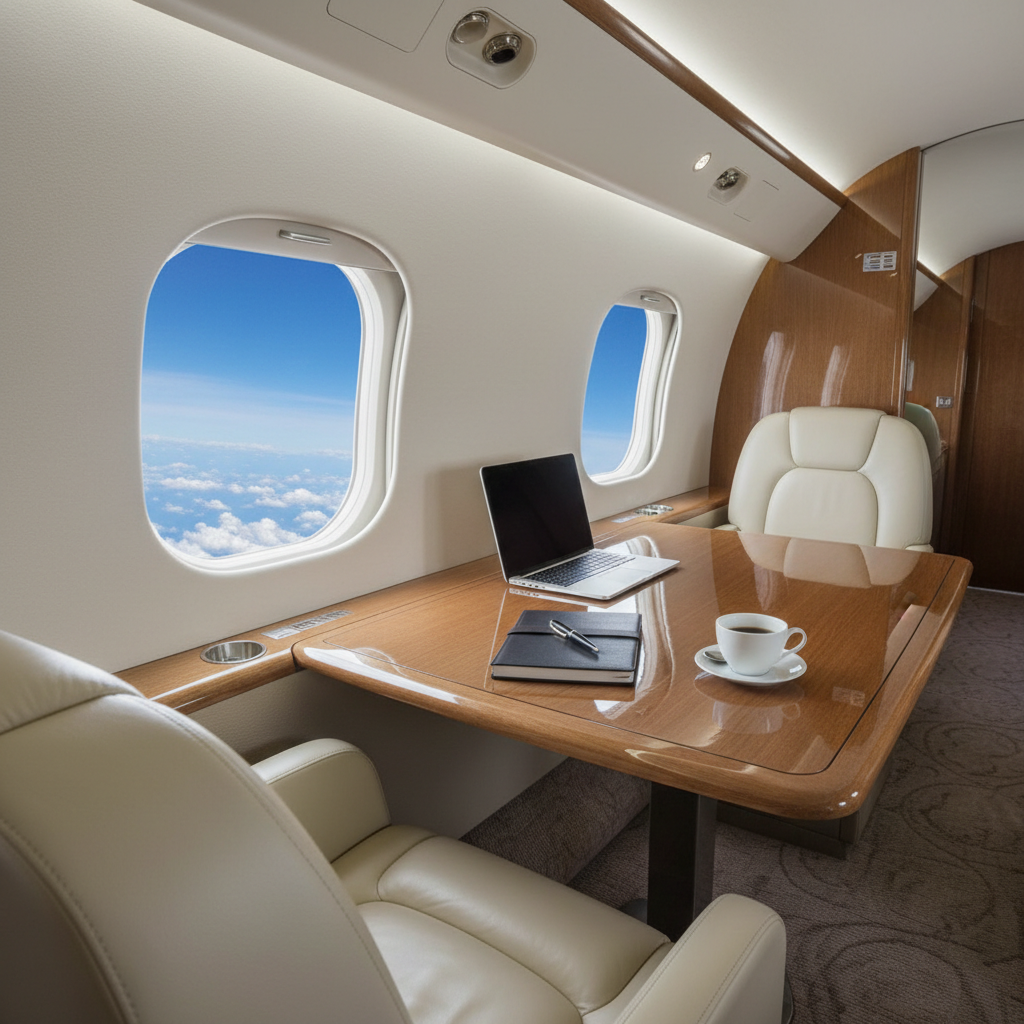
Reclaiming hours from airport logistics is only half the equation; how those hours are utilized defines the true return on investment. For a business development director, a private jet charter for business serves as a secure, mobile command center. While commercial business class offers comfort, it cannot provide the confidentiality required for high-stakes strategy sessions. Discussing a sensitive acquisition or a proprietary pricing model in a public cabin, even with noise-canceling headphones, poses a significant security risk.
In a private cabin, the layout is designed for collaboration. Club seating arrangements allow teams to face one another, facilitating the type of fluid, face-to-face interaction that a line of forward-facing seats prevents. With access to secure, high-speed Wi-Fi and integrated cabin technology, the aircraft becomes a seamless extension of the boardroom. You can conduct final rehearsals for a major pitch or review confidential legal documents without the prying eyes of a competitor in the next row. To simplify charter decisions, one must view the aircraft not as a transport vehicle, but as a protected workspace. This level of utility is precisely why private aviation is essential for firms that cannot afford a lapse in momentum or a breach of confidentiality during transit.
Access to Remote Markets and Regional Airstrips
While cabin privacy and onboard productivity are critical, the most significant strategic advantage of a private jet charter for business lies in the expansion of your geographic reach. Commercial airlines serve approximately 500 airports across Europe; however, the network of smaller regional airstrips exceeds 3,000. For small businesses targeting niche markets or managing regional supply chains, this discrepancy represents a major competitive edge.
Accessing smaller airstrips located directly adjacent to industrial parks or specialized manufacturing zones eliminates the common last mile problem. Instead of landing at a major hub and enduring a two hour chauffeured drive, your team can arrive at a local airfield minutes from the facility. This logistical agility allows for itineraries that are physically impossible via scheduled services. A business development team can realistically visit three client sites in three different European cities, such as Lyon, Stuttgart, and Poznań, in a single day and still return home for dinner.
Travel Element | Commercial Connection | Private Charter |
|---|---|---|
Available Airports (Europe) | ~500 | ~3,000+ |
Typical Ground Transfer | 60 - 120 Minutes | 10 - 20 Minutes |
Daily Site Visit Capacity | 1 Location | 3+ Locations |
By utilizing smaller airfields like Blackbushe for the M3 corridor or Cannes Mandelieu for coastal access, firms bypass the congestion of primary terminals. This level of access is exactly why private aviation is essential for operations directors who need to simplify charter decisions while maximizing their team’s physical presence in remote markets.
How Small Businesses Can Lower the Barrier to Entry
Scaling the cost of a private jet charter for business downward requires tactical selection of aircraft and timing. One of the most effective methods involves utilizing empty leg flights. These opportunities arise when an aircraft must return to its home base after a one-way mission or reposition for its next client. For a business team returning from a conference in Geneva to a London hub, booking an empty leg can reduce standard charter rates by 30 to 75 percent. While these flights require scheduling flexibility, they offer a high-tier experience at a price point often comparable to last-minute commercial business class fares.
Choosing the right aircraft for the mission is equally vital. For short domestic hops within the UK, such as London to Edinburgh or Liverpool to Jersey, turboprop aircraft like the Beechcraft King Air or Pilatus PC-12 are the most sensible choice. These aircraft operate at a lower hourly cost, typically between €2,000 and €3,500, yet provide executive cabins that comfortably accommodate five to eight passengers. They can also land at shorter regional airfields where larger jets cannot, further reducing ground transit costs and airport fees.
Working through a platform that provides direct access to a verified global fleet helps simplify charter decisions by ensuring price transparency across multiple operators. Planning for a 48 to 72-hour booking window often yields the best balance of availability and competitive pricing. This objective approach ensures that small businesses pay only for the capability they need, rather than for excess cabin space or unnecessary range.
Is It Worth It? A Decision Checklist for Small Business CFOs

The final determination for any CFO requires an objective analysis of the specific trip mission. A private jet charter for business is not an all or nothing commitment; it is a tool to be deployed when commercial travel becomes a liability. Use the following framework to assess the ROI of a specific itinerary:
Decision Factor | Charter Recommended | Commercial Acceptable |
|---|---|---|
Route Complexity | Multiple layovers / Remote airstrip | Direct flight / Major hub |
Passenger Count | 3 or more executives | 1 to 2 staff members |
Mission Criticality | M&A / High-stakes negotiation | Internal meeting / Routine site visit |
Schedule Intensity | 2 or more cities in 24 hours | Flexible timeline |
Quantifying the decision often relies on the executive burn rate. If a leadership team earns a combined £1,500 per billable hour, and a commercial journey wastes six hours in transit that a private flight recovers, the firm has reclaimed £9,000 in human capital. This data driven approach helps simplify charter decisions by moving beyond the sticker price. When the combined cost of commercial fares, ground logistics, and lost productivity exceeds the aircraft quote, understanding why private aviation is essential becomes a matter of fiscal responsibility. For missions meeting three or more high priority criteria, the investment typically pays for itself in operational momentum.
Ultimately, determining whether private jet charter fits your small business in 2025 depends on your specific growth goals and travel frequency. The productivity gains often outweigh the initial price tag, but managing these arrangements requires careful planning. If you want expert help streamlining your corporate travel strategy, we are ready to assist. You can read more about our mission to understand how we support growing companies; our team ensures every flight delivers maximum value to your bottom line.