A private jet charter for sports and entertainment provides elite athletes and celebrities with bespoke flight solutions that prioritize privacy, security, and tight scheduling for major global events. These services offer tailored amenities and flexible departures to ensure that teams, performers, and fans can travel directly to venues while maintaining peak performance or luxury standards.
When your schedule runs on tight margins and public airports mean missed connections, delayed tours, or a front-page photo you never approved, commercial travel stops being an option. For elite athletes, touring musicians, and entertainment professionals, private jet charter is not a luxury, it is a logistical necessity. But the way this world actually works, the costs, the access points, the operational details, remains opaque to most people outside it. In this guide, you will learn exactly how sports stars and entertainers use private charter as a performance and production tool, what the experience genuinely involves for VIP clients, what it realistically costs, and how a knowledgeable charter broker gives discerning individuals access to that same standard of travel.
Why Sports Stars and Entertainers Choose Private Charter Travel
Ask why a Premier League squad, a touring musician, or a Formula 1 driver chooses private charter over business class, and the honest answer has little to do with status. It comes down to a far simpler calculation: these individuals cannot afford the consequences of a delayed connection, a missed departure, or arriving at a venue exhausted and unprepared.
A typical Premier League club makes around 58 charter trips in a single season. During the 2022 World Cup in Qatar, it was routine to track multiple national team jets airborne simultaneously, each operating to a schedule that no commercial airline could replicate. These are not one-off indulgences; they are planned operational necessities built into performance budgets alongside coaching staff and physiotherapy.
The functional case for private jet charter for sports and entertainment is straightforward. Schedule control means a flight departs when the team or artist needs it to, not at the convenience of an airline's network. Privacy protects focus. Recovery time between back-to-back events is preserved rather than spent in departure halls. And the simple risk of missing a match, a sold-out show, or a contracted appearance is removed entirely.
What follows in this guide explores exactly how that system works, and why the same level of access is far more attainable for individual travellers than most people assume.
How Elite Athletes Use Private Jets: Beyond the Glamour
The celebrity angle sells magazines, but it tells you very little about why private jet charter for sports and entertainment functions the way it does at an operational level. The reality is considerably more practical, and more revealing.
Nutrition and performance preparation begin before an athlete boards. Professional sports teams operate on tightly controlled dietary plans, and those plans do not pause for a two-hour flight. Menus are compiled in direct consultation with team nutritionists and dieticians, specifying exact macros, preparation methods, and timing relative to competition. A charter crew does not offer a standard in-flight menu and hope for the best; they receive a brief that reads more like a medical document.
Mental preparation is treated with equal seriousness. Athletes travelling to competition are frequently in a focused, often inward state. Charter crews working regularly with sports professionals are briefed explicitly not to request photographs or autographs. The cabin environment is managed rather than left to chance, a level of control that no commercial flight can replicate regardless of the class of travel.
Medical discretion is another underreported use case. Specialist appointments, injury assessments, and consultations with surgeons in other cities all happen quietly via charter, away from public terminals and press scrutiny. The logistics protect both the athlete's health process and their professional position.
Recruitment and team culture operate here too. The Dallas Mavericks famously used charter travel as part of the package when courting NBA free agents, with ownership using private jet access alongside exclusive experiences as a direct recruitment tool. The aircraft becomes part of the proposition.
Post-competition, the dynamic shifts entirely. A crew experienced in this environment understands that a squad returning from a heavy defeat needs a different atmosphere to one celebrating a title win. Reading that emotional register correctly, and adjusting service accordingly, is a professional skill in itself.
Music Tours and the Entertainment Industry: Private Charter as a Production Tool
The athlete use case is built around a single event and the preparation surrounding it. The entertainment industry presents a fundamentally different operational challenge: dozens of events, across multiple countries, with a large travelling party and tonnes of physical equipment, all running to a schedule where a single missed connection collapses the entire structure.
A major touring artist does not simply need a flight. They need a logistics solution. Multi-leg tour routing frequently involves two or three cities in under 48 hours, with turnarounds that commercial schedules simply cannot accommodate. No airline network is built around the requirement to depart at 1am after a stadium show and arrive at a festival site in another country by mid-morning. Charter is not a preference in this context; it is the only workable option.
Cargo is a dimension the athlete model rarely involves at the same scale. Production equipment, stage wardrobe, instruments, and technical gear often travel alongside the passenger manifest on the same aircraft, or on a coordinated parallel cargo charter. The routing of people and equipment must be synchronised precisely. Air Partner, one of the longer-established operators in this space, has managed over 2,000 tour legs for entertainment professionals, which gives some indication of the operational volume involved.
The travelling party itself adds complexity. A touring artist moves with backing vocalists, security personnel, management, stylists, and production crew. The group size and composition change leg by leg. Charter accommodates that variability where commercial booking cannot.
The festival circuit concentrates all of this pressure into a single weekend. Performing at events in different countries on consecutive days is standard at the upper end of the industry. Villiers Jets notes in their own content that musicians use private charter specifically to protect the touring schedule and eliminate the downtime that commercial travel would otherwise force into it.
This model scales. A music industry professional or a dedicated fan attending multiple European festival dates across a weekend can access the same routing flexibility through on-demand charter, without the touring artist's budget or infrastructure behind them.
What the Private Charter Experience Actually Looks Like for VIP Clients

Understanding the operational logic of private jet charter for sports and entertainment is one thing. What it actually feels like to use it, from the moment you leave home to the moment you arrive at the venue, is a different matter entirely, and it is the part most coverage ignores.
The experience begins before the aircraft. Rather than entering a public terminal, passengers arrive at a dedicated Fixed Base Operator facility, a private aviation terminal with its own entrance, parking, and lounge. There are no queues, no security theatre, no departure boards to monitor anxiously. When the aircraft is ready, you walk to it. The gap between arriving at the airfield and being airborne is typically measured in minutes.
Departure happens on your schedule. If a post-show debrief runs long or a pre-match preparation session overruns, the aircraft waits. That single fact eliminates an entire category of travel risk that commercial itineraries cannot absorb.
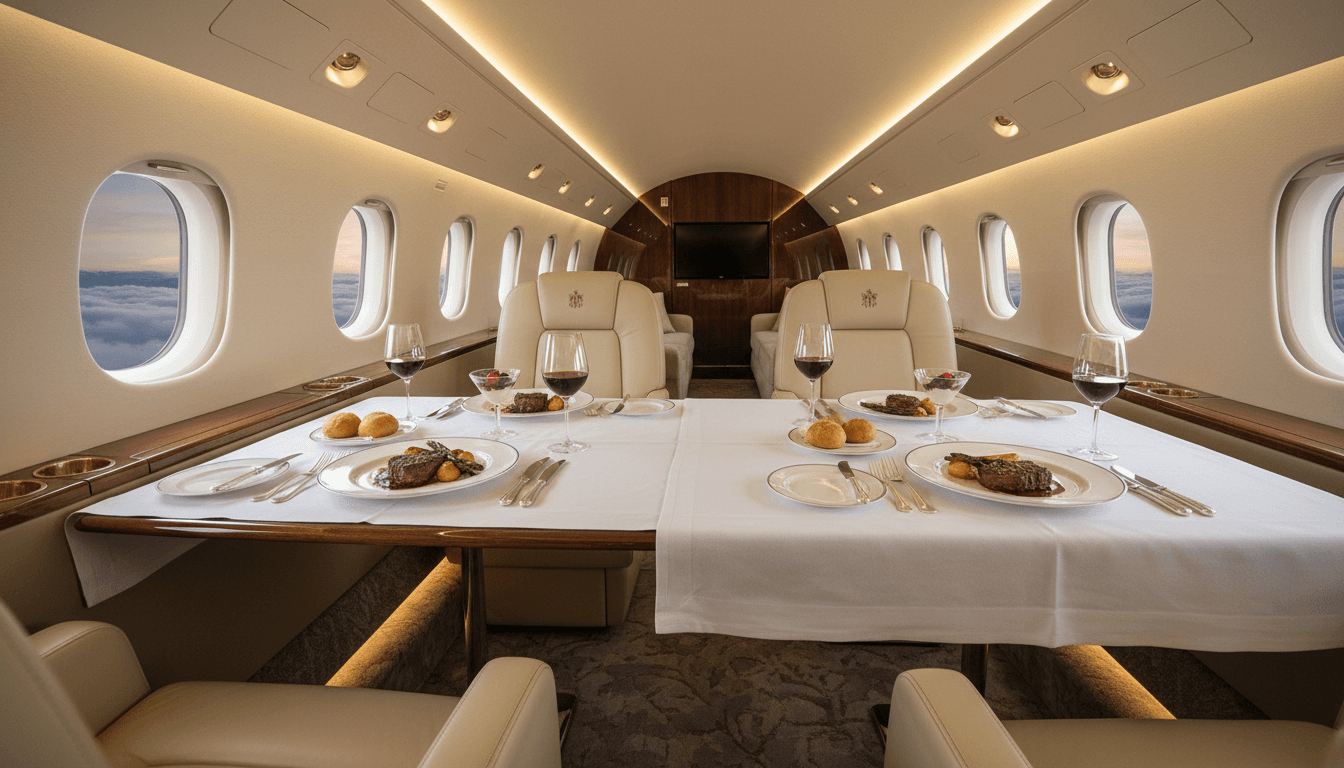
Once airborne, the cabin is configured to purpose rather than airline convention. A solo athlete might use the space for rest and recovery, with the crew briefed accordingly. A management group might need it arranged as a working meeting space. Catering is prepared to specification, not selected from a trolley. The environment is controlled, quiet, and entirely oriented around the people on board.
Arrival follows the same logic. Charter flights routinely use smaller airports positioned closer to stadiums, arenas, and festival sites, cutting out the long ground transfers that commercial hubs impose. Passengers step off the aircraft rested, focused, and ready.
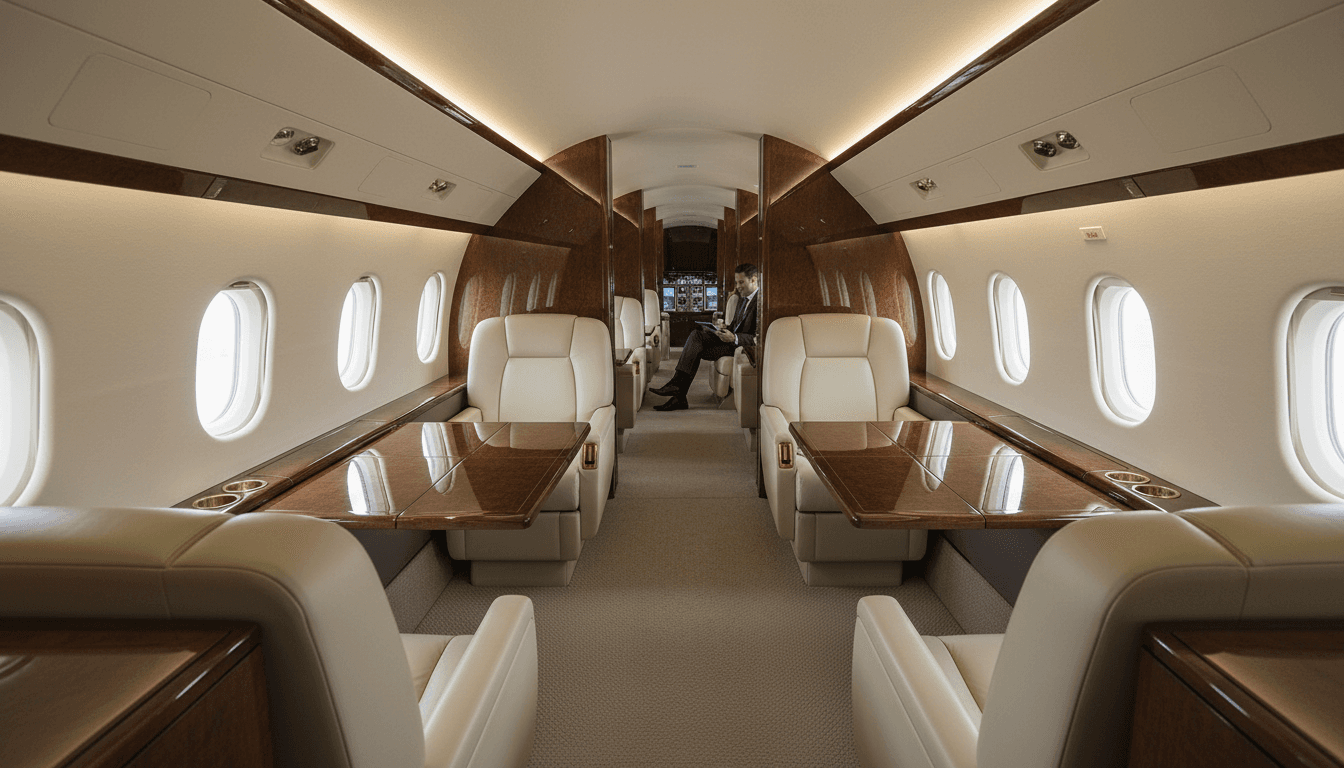
The aircraft itself is matched to the group. A light jet serves one to four passengers efficiently on UK-Europe routes. A mid-size jet accommodates six to eight comfortably. A large cabin jet or narrow-body airliner handles a full squad or touring party. That scalability is part of why private jet charter is worth it for groups of almost any size.
How Much Does Private Jet Charter Cost for Sports and Entertainment Travel

That question, how much does it cost to charter a plane for a team, is one most charter providers dodge. The honest answer is that costs vary considerably depending on aircraft type, route, group size, and timing, but ballpark ranges are possible and worth stating plainly.
For a solo athlete or small group of up to four passengers on a UK-Europe route, a light jet typically falls in the region of £3,000 to £8,000. A mid-size jet carrying six to eight passengers runs roughly £6,000 to £15,000 on comparable routes. A large cabin jet or narrow-body airliner configured for a full squad or touring party, the kind of aircraft a Premier League club or major recording artist would use, starts around £20,000 and can reach £80,000 or more depending on range, aircraft specification, and positioning requirements.
Those figures change significantly for flexible travellers. Empty leg flights, which arise when an aircraft needs to reposition after dropping off passengers, can reduce the cost of a comparable journey substantially. They require flexibility on timing and routing, but for the right trip they represent genuine value.
The per-person maths also deserves scrutiny. A group of eight sharing a mid-size jet at £12,000 is paying £1,500 each. On many UK-Europe routes, that is not far removed from a business class fare, once airport transfers, lounge access, and the time cost of commercial travel are factored in honestly. For private jet charter for sports and entertainment at a group level, the premium over commercial travel is frequently smaller than it appears.
How Discerning Individuals Can Access the Same Experience Through a Charter Broker

The cost section makes the per-person economics clearer, but the access question remains: how does an individual traveller, without a Premier League budget or a stadium tour behind them, actually book the same experience?
The answer is through a charter broker, and the process is more straightforward than most people expect. A broker does not operate aircraft; they source them. Working from a global network of operators and available aircraft, a broker identifies the right aircraft for your route and group size, handles the logistics, negotiates pricing on your behalf, and gives you a single point of contact throughout. You deal with one person; they coordinate everything else.
ELF works with Villiers Jets, whose platform connects clients to thousands of aircraft across hundreds of operators worldwide. That reach matters because it means the right aircraft for your specific trip, whether a light jet for two people heading to a European fixture or a larger cabin for a group attending a festival weekend, is almost always available.
It helps to understand the three main access models. Owning a jet carries enormous fixed costs and suits only the highest-volume users. A jet card commits you to a set number of hours with one operator at a fixed rate. On-demand charter via a broker carries no ownership costs, no upfront commitment, and no lock-in. For most travellers, it is the most flexible and practical entry point.
Geographically, the South East is well served. Departures from London, Gatwick, Shoreham, or Biggin Hill mean that readers across the region, including those based in and around Eastbourne, are within easy reach of a private terminal. Get a personalised quote to see what that looks like for your specific journey.
Booking Private Charter for a Sporting Event or Entertainment Trip: What to Expect
Knowing the process removes the last barrier. Booking private jet charter for sports and entertainment follows a straightforward sequence, and the broker handles the operational weight at every step.
Define the basics. Group size, departure point, destination, and date. That information is enough to start. You do not need to know which aircraft type you want.
Contact a broker. The broker goes to market across multiple operators and returns with options. Villiers Jets accesses thousands of aircraft globally, which means genuine choice rather than a single operator's available inventory.
Review aircraft options and pricing. You will typically see two or three aircraft options at different price points. The broker explains the trade-offs clearly.
Confirm with a deposit. Once you select an aircraft, a deposit secures it. The remainder is due closer to departure.
Receive your itinerary and ground logistics. Terminal details, transfer arrangements, catering confirmation, and timing all come to you as a single document.
Lead times matter, particularly for major events. Two to four weeks' notice gives the best aircraft selection and pricing. Last-minute charters are possible, but for fixtures like Champions League finals or major festival weekends, airport slots at smaller private terminals fill quickly and options narrow fast.
The operators serving Premier League squads and touring artists are the same operators serving individual and small group bookings. Get a personalised quote to start the process.
Navigating the demands of a high-performance career requires travel solutions that prioritize your schedule and privacy. Whether you are coordinating a multi-city sports tour or a quiet retreat away from the cameras; private charters offer the flexibility and security you need. If you are looking for expert guidance to handle these complex logistics; our team is here to help. You can learn more about Why Private travel is the preferred choice for elite professionals who value their time and discretion above all else.