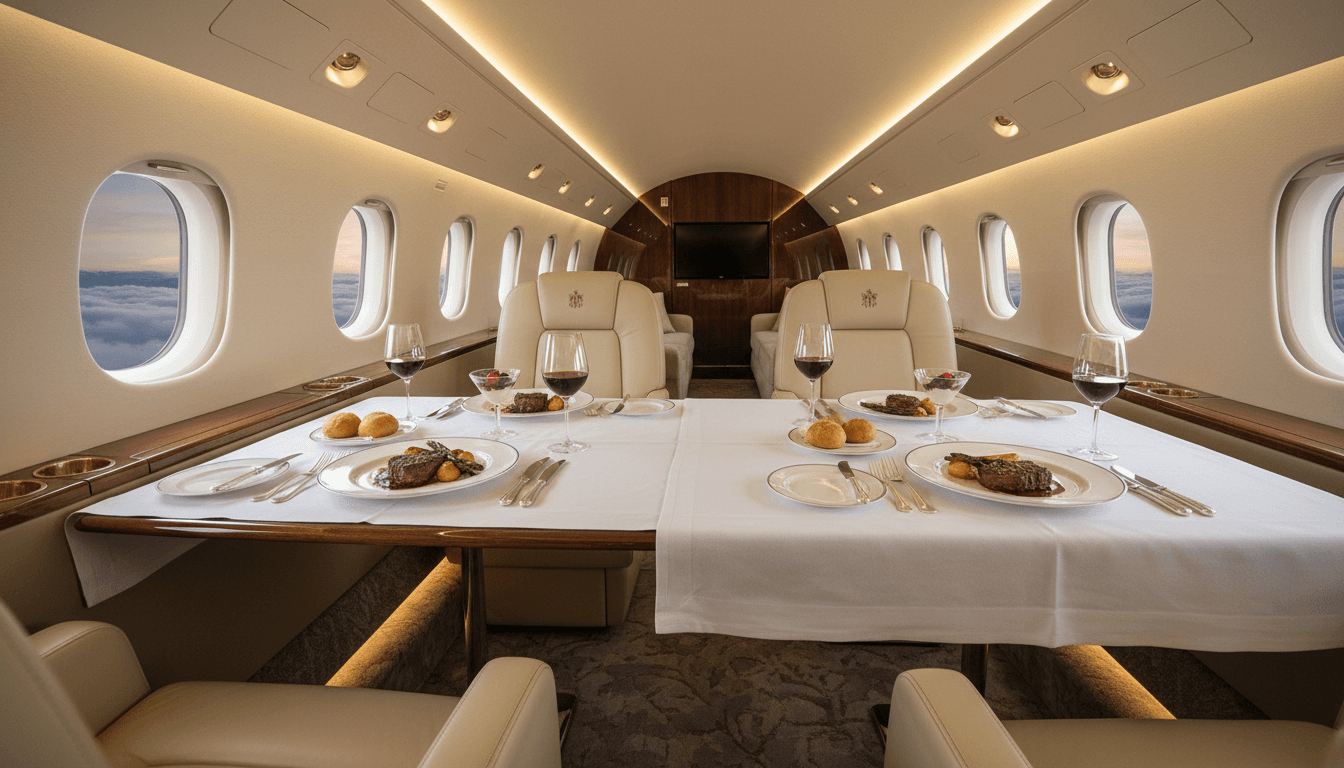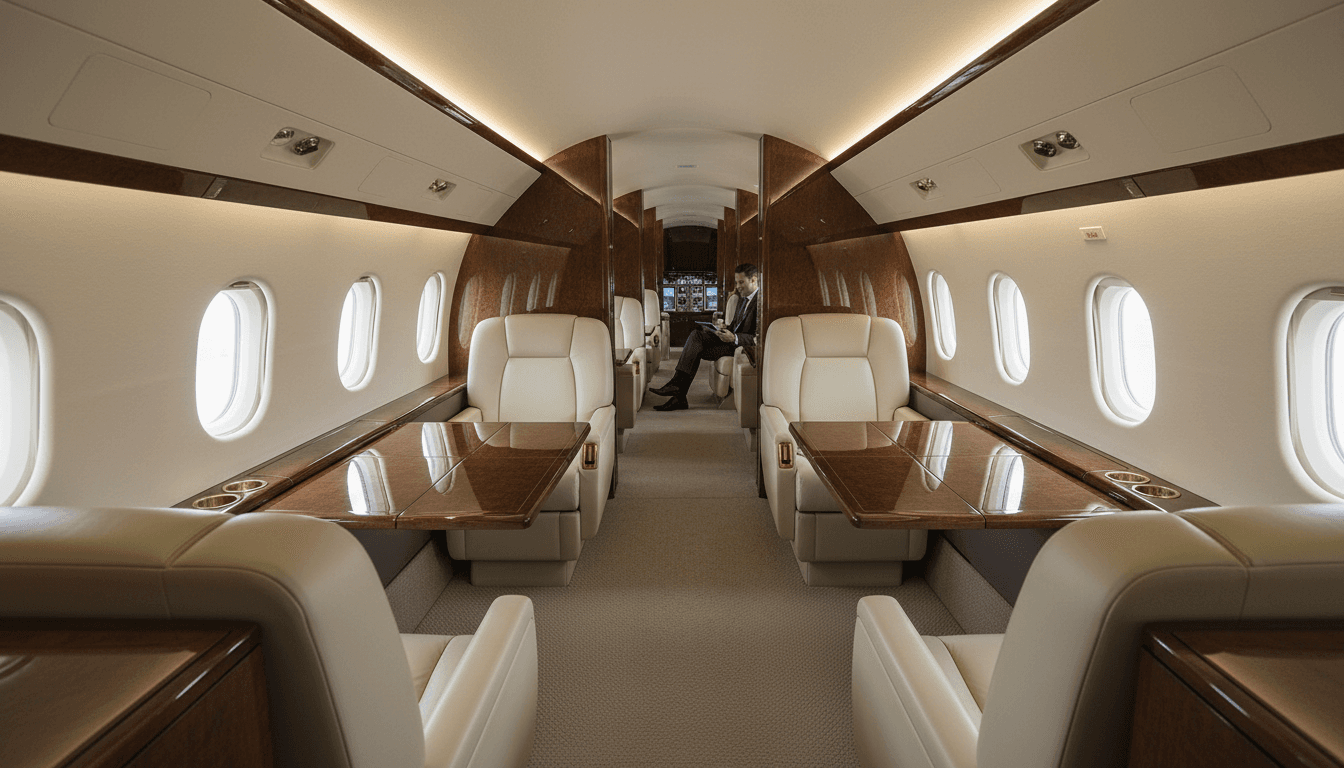
Empty leg flights are repositioning journeys where a private jet travels without passengers to reach its next destination, offering travelers luxury travel at discounts of up to 75 percent. To book these flights, travelers typically monitor charter operator websites or use specialized mobile apps to find pre-determined routes that match their schedule. These flights provide a cost-effective way to fly private, although they require flexibility since the aircraft type and timing are fixed.
Private aviation has long carried a reputation for exclusivity, but a persistent gap in the market has quietly made it accessible to a far wider audience. If you have ever watched a private jet price and thought it was simply out of reach, empty leg flights may change that calculation entirely. These discounted repositioning flights represent one of the most underutilized opportunities in luxury travel, yet most people have never heard of them or know how to act on them quickly enough. In this guide, you will learn exactly what empty legs are, why they exist, how much you can realistically save, and how to secure one before someone else does.
What Is an Empty Leg Flight
An empty leg flight is a private jet journey that operates with no paying passengers on board. It arises directly from how private aviation works: when an operator flies a client from one city to another, the aircraft must either return to its home base or reposition to the next departure point. That repositioning trip, flown without passengers, is the empty leg.
You will also see them listed under several alternative names: dead leg, ferry flight, deadhead flight, and one-way transient. The terminology varies by operator and region, but they all describe the same thing.
The scale of this is striking. Nearly 40% of all private jets are flying empty at any given time, purely because of repositioning requirements built into private aviation logistics. That is an enormous volume of unused capacity, and it is precisely why operators are willing to sell these seats at steep discounts rather than absorb the full cost of flying with nothing on board.
For a fuller picture of how the economics work, empty leg flights explained covers the broader landscape in detail.
Why Empty Leg Flights Exist: The Logistics Behind the Discount

Understanding why these flights exist requires a brief look at how private aviation actually operates. A private jet operator does not run a scheduled network. Every flight is arranged around a specific client's itinerary, which means aircraft are constantly repositioning between jobs.
Consider a straightforward example. A client books a jet from London Farnborough to Nice for a long weekend. The aircraft flies south, drops the passengers, and then sits in Nice. The operator needs that aircraft back in London, either to return it to base or to meet the next charter departure. So it flies the return leg empty. That flight back to Farnborough is the empty leg, and it represents a real operational cost the operator must absorb regardless of whether anyone is on board.
This is the core dynamic: repositioning is an unavoidable feature of private aviation, not an anomaly. Fuel, crew, handling fees, and landing charges accrue on every flight. An operator selling seats on that empty return at 50% below standard charter rates still recovers meaningful revenue against costs they were always going to incur. Flying completely empty recovers nothing.
The volume of this is considerable. Roughly 30-50% of all privately chartered flights generate an empty leg at some point in their rotation. That translates to a substantial pool of discounted availability at any given moment, which is precisely what makes the opportunity real for travellers who understand how to access it.
How Much Can You Save on Empty Leg Flights

That pool of discounted availability translates into real money. Empty leg flights are typically priced at 25% to 75% below standard charter rates, though the exact figure depends on the aircraft type, the route, and how close to departure you book.
The numbers are worth seeing in concrete terms. A light jet from London to Zurich as a standard charter would ordinarily cost in the region of £10,000 to £14,000. The same route as an empty leg can drop to £3,000 to £5,000. That is not a marginal saving; it is a fundamentally different price point. A more striking example: a Citation CJ2 light jet on a Budapest to Milan route carries a standard charter cost of roughly £12,500 to £16,500 for six passengers, working out to around £2,084 per person. As an empty leg, that same flight starts at approximately £1,913 total, or £319 per person. The aircraft, the crew, and the service are identical.
The steepest discounts appear in the 24 to 72 hours before departure, when an operator faces the starkest choice between recovering some revenue or flying completely empty. The closer to wheels-up, the more motivated the pricing.
It is also worth noting that the fare is not always fixed until departure. If the originating charter changes its routing, swaps the aircraft, or shifts the departure airport, the empty leg pricing can move with it. That variability is part of the trade-off, and understanding it is essential before committing to a booking.
The Trade-Offs You Need to Know Before Booking
That pricing variability points to something important: empty leg flights are genuinely exceptional value, but they come with real constraints that most articles gloss over. Here is an honest breakdown.
What works in your favour:
Savings of 25% to 75% against standard charter rates
Access to private FBO terminals with no check-in queues, no security lines, no crowds
Board minutes before departure rather than hours
Access to smaller regional airports that commercial routes do not serve, often significantly closer to your actual destination
For eco-conscious travellers: the aircraft is already committed to making the flight regardless of whether you are on board. Booking an empty leg adds zero additional carbon to the atmosphere. You are filling a seat on a flight that would have happened anyway.
What you need to accept going in:
The route is fixed. You cannot choose your destination; the aircraft is going where it is going.
Cancellations happen. If the originating charter is cancelled or rerouted, your empty leg disappears with it, sometimes at short notice.
Confirmed departure is not guaranteed until close to wheels-up. In practice, 100% certainty may only arrive an hour before departure.
None of these downsides are reasons to avoid empty legs. They are simply the terms of the trade. Travellers who go in with clear expectations consistently find the experience worth it. Those who need certainty weeks in advance, or who have a fixed destination in mind, may find that whether private jet charter is worth it as a standard booking is the more appropriate question.
How to Find and Book Empty Leg Flights: A Step-by-Step Guide

Knowing the trade-offs is one thing; knowing how to actually find and secure an empty leg is where most guides fall short. There are three methods that work, and using them in combination gives you the best chance of landing a deal.
1. Work with a specialist broker
A broker like Villiers Jets aggregates empty leg availability across thousands of operators globally, which is something you simply cannot replicate by contacting operators individually. Going direct to a single operator means you only see their fleet. A broker sees the whole market simultaneously and can match your travel window to available routes you would never have found yourself. They also maintain searchable live databases, which directly addresses the practical question of how to track availability over time rather than catching a single snapshot. If you want to get a personalised quote, a broker is the most efficient starting point.
2. Set up alerts and subscribe to notifications
Empty legs are published and sold quickly. Operators and brokers release availability as soon as a repositioning flight is confirmed, and the best deals are claimed fast. Signing up for alert emails and push notifications means you hear about a London to Nice leg or a UK to Ibiza positioning flight the moment it goes live, rather than discovering it has already gone. Popular European routes, including London to Nice, London to Ibiza, and UK departures to Alpine ski destinations in winter, generate empty legs with genuine regularity. Alerts are how frequent flyers treat this as a repeatable strategy rather than a lucky find.
3. Lead with flexibility
Flexibility is the single biggest factor in whether you secure a deal. If you can tell your broker you are open to departing from Farnborough, Biggin Hill, or Luton, you multiply your options considerably. The same applies to dates: a window of two or three possible departure days is often the difference between finding a match and missing one entirely. The aircraft is going where it is going; your job is to position yourself as close to that route as possible.
Can You Negotiate Empty Leg Pricing
Flexibility secures the booking; negotiation can improve the price further. Most competitor guides skip this entirely, but yes, empty leg pricing is genuinely open to negotiation in the right circumstances.
The logic is straightforward. An operator facing a departure in 36 hours with an unsold empty leg has a simple choice: recover some revenue or recover none. That dynamic shifts meaningful leverage toward the buyer, particularly as wheels-up approaches.
A few practical approaches that actually work:
Let your broker negotiate for you. This is the most effective route. Brokers have direct operator relationships and know what a realistic counter-offer looks like without insulting the conversation. They also know which operators are more motivated to deal on a given route.
Target flights under 48 hours out. Pricing is at its most flexible inside that window. A flight five days away may hold firm; a flight departing tomorrow morning is a different conversation entirely.
Offer an alternative nearby airport. If the aircraft is positioning to one destination airport and you can accept a slightly different arrival point, that routing flexibility can unlock a lower rate because it may better suit the operator's next booking.
Charter the whole aircraft as a group. Single-seat arrangements leave less room to move. When a group takes the entire cabin, the negotiation is on the total package price, and operators are more willing to come down to close the deal.
None of this requires aggressive tactics. A straightforward conversation through your broker, framed around the mutual benefit of filling a seat, is usually enough.
Are Empty Leg Flights Safe
The negotiation tactics above occasionally prompt a question from first-time private jet inquirers: if the price is this low, what is being compromised? The answer is nothing that touches safety.
Empty leg flights operate on the same aircraft, flown by the same certified pilots, maintained to the same standards as any standard charter. The only thing that changes is the pricing model. The aircraft is not serviced differently because the seats are discounted. In the UK, all reputable operators are fully licensed and regulated by the Civil Aviation Authority, and those requirements apply regardless of how a particular flight is priced or sold.
A reduced fare reflects an operator's commercial decision to recover some revenue on a repositioning flight, not a reduction in airworthiness, crew qualifications, or operational oversight. The aircraft was already cleared to fly. You are simply filling a seat on it.
Who Are Empty Leg Flights Best Suited For

Safety established, the next question most people ask is a practical one: is this actually for me? Most guides never answer it directly. Here is an honest profile of who empty leg flights genuinely suit.
Flexible leisure travelers. A couple who can decide on a Friday morning to spend the weekend in Nice, or anyone who can say yes to a departure 48 hours away, is exactly who the empty leg market is built for. The spontaneity that makes empty legs difficult for some travelers is precisely what makes them ideal for others.
Business travelers with open schedules. If you need to reach a city but are not anchored to a specific departure time, empty legs represent a legitimate and repeatable way to travel privately at a fraction of standard charter cost. Businesses already account for nearly half of all empty leg bookings for this reason.
Groups marking a special occasion. Stag parties, milestone birthdays, and honeymoons are strong fits. The entire cabin experience, private terminal access, no queues, complete discretion, becomes accessible at a price point that a group can realistically split.
Frequent flyers treating it as a strategy. Setting up alerts and checking availability regularly turns empty legs from a lucky find into a consistent travel approach. This is how experienced private travelers extract the most value over time.
UK-based travelers are particularly well-placed here. The density of private aviation activity out of London's airports and regional fields, including those within reach of the South East, means European empty legs appear with genuine regularity. If you are ready to move quickly when one does, get a personalised quote and let a broker match your availability to live inventory.
Understanding empty leg flights is the secret to enjoying private aviation without the typical price tag. While these opportunities offer incredible value, they also demand a high degree of flexibility and a keen eye for timing. If you want expert help navigating the complexities of the private jet market, our team is here to streamline the search for you. To further simplify your travel planning, you might find our resource on Empty Leg Flights Explained particularly helpful as a natural next step.