Private jet travel offers unmatched time savings and scheduling flexibility, while first class provides a more cost-effective luxury experience for solo passengers. Choosing between a private jet vs first class depends on your specific budget and priorities; private jets are generally better for groups or urgent business needs where privacy and control are paramount.
You're staring at a first class fare that costs more than your first car, wondering if a private jet charter could somehow cost less or at least feel worth the difference. It's a legitimate question, and the answer is almost never straightforward. The gap between these two options is wider than price alone, covering everything from how you spend your time on the ground to who sits next to you at 40,000 feet. In this guide, you will get an honest, numbers-driven look at what each option actually costs in 2026, where each one wins, where each one quietly fails, and how smart travellers are combining both to get maximum value without paying for prestige they don't need.
The Real Question: What Are You Actually Paying For?
Most people arrive at the private jet vs first class debate thinking it is a straightforward cost comparison. It is not. The real question is what you are actually optimising for on a given trip: the lowest per-seat price, the fastest door-to-door journey, a completely private environment, or the freedom to depart on your own schedule.
Both options are genuinely excellent depending on your travel profile, and neither deserves the dismissive treatment each often receives. This article takes an honest, unsponsored look at both, grounded in the UK travel context, covering routes from Heathrow and Gatwick through to regional departure points like Farnborough and Shoreham near Eastbourne.
The sections ahead work through cost, time, comfort, flexibility, and the specific scenarios where each option comes out ahead.
Private Jet vs First Class: The Honest Cost Comparison for 2026

Start with the numbers, because that is what most people searching private jet vs first class actually need.
On a London to Geneva return, a first class ticket in 2026 runs roughly £2,500 to £4,000 per person, depending on the airline and booking window. A light jet charter on the same route costs approximately £8,000 to £12,000 for the entire aircraft, not per seat.
The per-head arithmetic is where the comparison gets interesting:
Passengers | First Class (per person return) | Light Jet Charter (per person) |
|---|---|---|
1 | £2,500 to £4,000 | £8,000 to £12,000 |
2 | £2,500 to £4,000 | £4,000 to £6,000 |
4 | £2,500 to £4,000 | £2,000 to £3,000 |
6 | £2,500 to £4,000 | £1,333 to £2,000 |
For a solo traveller, first class wins on price without any serious debate. That remains true on longer routes too: a private jet from London to Dubai or Singapore carries costs that are simply prohibitive per seat unless you are filling a large cabin aircraft.
The equation shifts meaningfully from four passengers upward on European routes. At six passengers, a light jet charter to Nice or Geneva can cost less per head than first class, while delivering a fundamentally different experience. A mid-size jet on the same route, priced at £14,000 to £18,000, comfortably seats seven to nine and the per-person figure stays competitive.
One variable that changes the calculation entirely is empty leg flights. These are repositioning flights sold at a discount, sometimes 50 to 75 percent below the standard charter rate, which can bring private jet travel into first class price territory for travellers with flexibility on timing.
Long-haul is a different conversation, and the sections ahead address comfort and time on those routes separately.
Time Is Money: The Airport Experience Nobody Talks About

Cost tells only part of the story. The more revealing comparison, particularly on short-haul European routes, is total door-to-door time, and most articles on private jet vs first class handle this superficially.
Here is what a typical 2-hour European flight actually looks like for each option:
Stage | First Class | Private Jet via FBO |
|---|---|---|
Arrive at airport | 90 minutes before departure | 15 to 20 minutes before departure |
Security | 15 to 20 minutes (fast-track) | Personalised screening, under 5 minutes |
Gate wait and boarding | 20 to 30 minutes | Walk directly to aircraft |
Taxi and take-off | 15 to 25 minutes | 10 to 15 minutes |
Flight | 2 hours | 2 hours |
Disembark and baggage claim | 20 to 30 minutes | Walk off, car waiting |
Total door-to-door | 5 to 6 hours | Roughly 3 hours |
That gap of two to three hours is not a rounding error. For a business traveller, it is half a working day.
The airport access advantage compounds this further. Commercial aviation serves roughly 9,000 airports worldwide. Private jets can access over 40,000. On many European routes, that means landing at an airfield 10 minutes from your meeting rather than taking a 90-minute transfer from a major hub.
For travellers in the South East of England, this is particularly tangible. Departing from Farnborough, Biggin Hill, or Shoreham rather than Heathrow removes not just the terminal wait, but often an hour or more of motorway time on either end of the journey.
Comfort and Privacy: Honest Differences Between the Two
The time savings are significant, but comfort and privacy deserve their own honest treatment, because this is where the private jet vs first class debate gets genuinely nuanced.
Let's be direct about something competitors rarely acknowledge: the first class product on Emirates, Singapore Airlines, and British Airways is extraordinary. Emirates A380 first class suites are fully enclosed, with sliding doors, a separate vanity area, and a shower on board. Singapore Airlines Suites on the A380 offer a double bed made up by the crew and one of the most refined service experiences in commercial aviation. British Airways Club Suites, while technically business class, provide door-closed privacy with direct aisle access and a genuinely flat bed. For long-haul travel, these products deliver a level of per-seat opulence that a light jet cannot rival.
So where does a private jet actually win? Not on interior grandeur, but on total control and exclusivity.
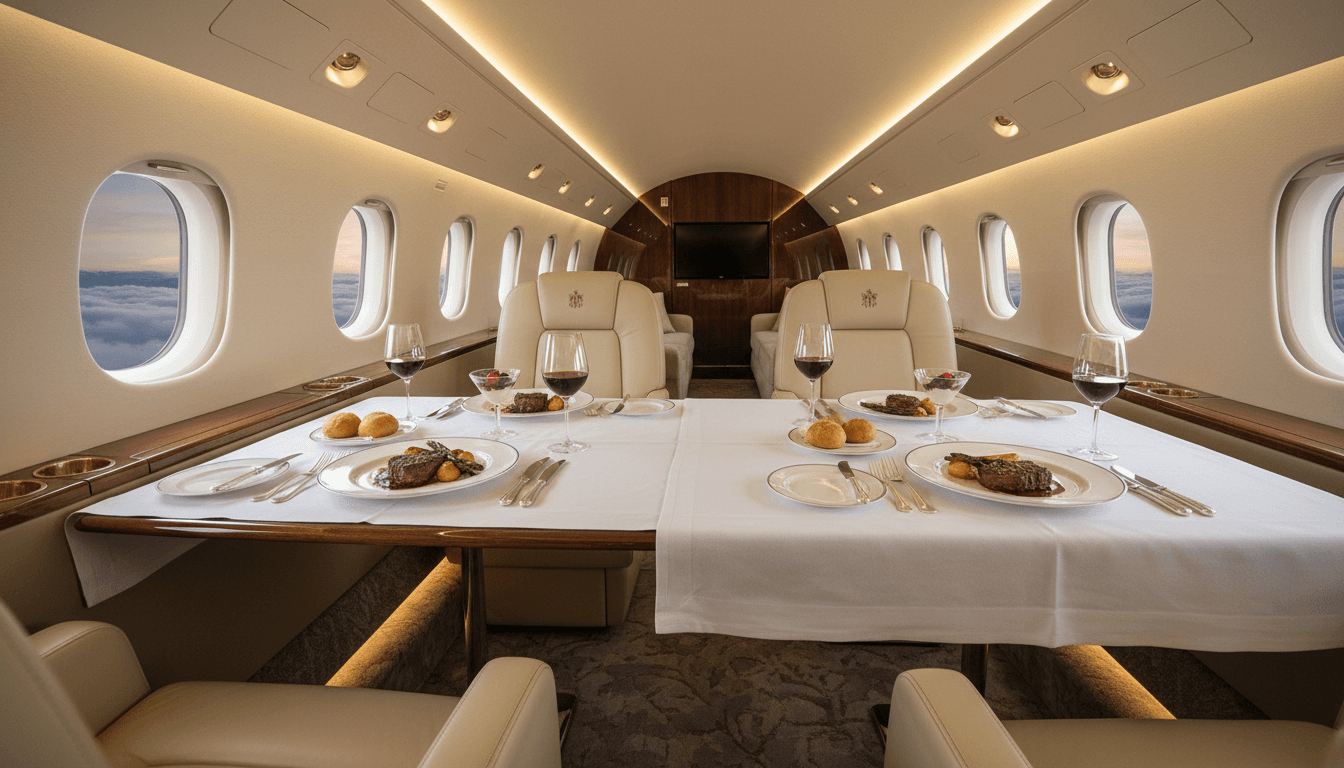
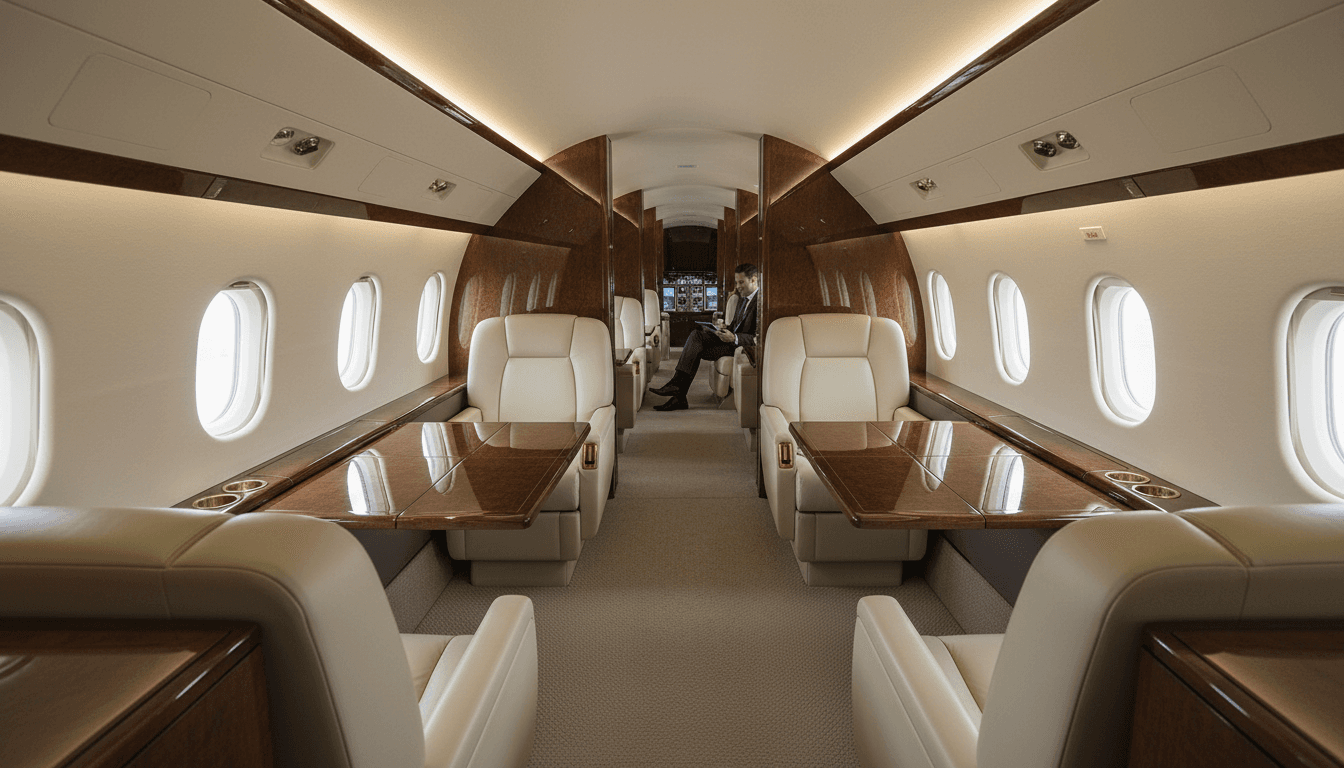
On a private jet, the entire cabin belongs to your group. You set the temperature, choose the lighting, select the food in advance, and determine when the aircraft departs, within reason. There are no strangers in adjacent suites, no airline catering decisions made for 300 passengers, and no constraint on confidential conversation. For a legal team discussing a deal, or an executive preparing for a board meeting, that matters considerably.
Practical freedoms also accumulate: your dog travels with you in the cabin, your departure time can shift by a few hours without penalty, and a mid-size or large cabin jet offers a full galley, separate seating areas, and standing room throughout.
The honest summary is this: first class wins on amenity density per seat; private jet wins on control, exclusivity, and the absence of compromise.
When First Class Is the Better Choice
That honest summary matters here, because the same logic cuts both ways. There are genuine scenarios where first class is not just cheaper but the objectively better choice.
The clearest case is the solo long-haul traveller. On a transatlantic route, London to Dubai, or London to Singapore, the economics of private jet charter become difficult to justify individually. A large cabin jet capable of transatlantic range starts at £80,000 to £150,000 or more for a single crossing. No reasonable per-seat calculation makes that competitive with a first class ticket priced at £3,000 to £6,000.
For those holding airline miles or points, the gap widens further. Avios redemptions on British Airways first class, or similar programmes on partner carriers, can reduce the effective cash cost dramatically, sometimes to the level of a premium economy fare in out-of-pocket terms. A private jet has no equivalent redemption mechanism.
On a 12-hour flight, the cabin amenity density of a premium long-haul product is genuinely exceptional. Emirates A380 first class offers an enclosed suite, a full shower, and a level of onboard dining that a smaller private jet, constrained by galley size and range stops, simply cannot replicate in the same format. That is not a caveat; it is an honest fact.
Finally, some destinations are simply better served by commercial networks. Remote routes, certain transatlantic city pairs, and destinations across Asia or Africa may have no practical private jet option that does not involve multiple fuel stops adding hours to the journey.
When Private Jet Charter Makes More Sense
The scenarios where private jet charter pulls ahead are specific and worth naming clearly.
A group of four or more travelling on a European route is the most straightforward case. The per-person arithmetic already covered earlier in this article makes the case numerically, but the lived experience compounds the value. Five colleagues flying from Farnborough to Cannes during the film festival arrive having held a full working briefing in a private cabin, with no overheard conversations, no middle-seat compromises, and no transfer from Nice airport through festival traffic. A corporate team heading to a confidential meeting in Zurich boards without queuing, discusses deal terms freely in the air, and lands at a smaller airfield that may be considerably closer to the actual meeting venue.
Families with young children or pets are another clear case. Commercial first class, however refined, still involves terminals, queues, and the unpredictability of a shared environment. On a private jet, the departure time has meaningful flexibility, the dog travels in the cabin, and the stress profile of the journey is categorically different.
Time-critical travel is a third scenario. When a missed connection has serious professional or personal consequences, removing commercial variables entirely changes the risk calculation.
For these situations, private jet charter delivers something first class structurally cannot: complete control over every element of the journey, at a per-person cost that, for groups, is often closer to first class than people expect.
The Hybrid Strategy: Using Both Without Overpaying
The private jet vs first class debate is often framed as a binary choice, but experienced luxury travellers rarely treat it that way. The more considered approach is to use both, assigning each to the routes where it genuinely wins.
In practice, that means first class on transatlantic or long-haul routes where private jet costs per seat become difficult to justify, and private jet charter for short-haul European trips where the time compression and departure flexibility deliver disproportionate value. A traveller might fly British Airways first class to New York, then take a light jet from Farnborough to Geneva three weeks later for a two-day corporate trip. Neither choice contradicts the other.
The empty leg flights layer adds a third option for those with schedule flexibility. Repositioning flights from UK airports appear regularly on routes to the South of France, Ibiza, and Alpine ski destinations during peak seasons, often priced inside what a first class return would cost. That is not a promotional point; it is simply how the market works for people who know to look.
Private Jet vs First Class: A Quick Decision Guide
If you have read through the detail above, this framework distils it into a fast reference.
Choose First Class if... | Choose Private Jet if... |
|---|---|
You are travelling solo | You are travelling with 3 or more people |
The route is long-haul (transatlantic, Asia, Gulf) | The route is short to medium haul in Europe |
You hold airline miles or Avios to redeem | Per-person cost at group size rivals first class |
The destination is poorly served by charter operators | You need to reach a smaller airport near your destination |
You value suite-level cabin amenity density | Complete privacy and schedule control matter more |
Budget is the primary constraint for a solo trip | You are travelling with children, pets, or sensitive cargo |
For flexible travellers, empty leg flights occasionally dissolve the distinction entirely. And if your situation does not fit neatly into either column, the most straightforward next step is to get a quote for your next flight and compare the actual number against what first class would cost for your group size and route.
Ultimately, choosing between first class and private aviation in 2026 depends on how you value your time and personal space. While premium commercial cabins offer comfort, private jets deliver the ultimate flexibility for those with demanding schedules. Understanding these nuances helps you make the most informed decision for your lifestyle. If you want expert help optimizing your luxury travel arrangements, you can learn more on our About page regarding our personalized approach to logistics. We are here to ensure your transitions are as seamless as the flight itself.